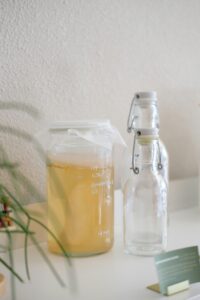
The SCOBY and pellicle can look very ugly, but that does not mean they’re unhealthy. In this blog, I will show some examples of mould, so you can see what it might look like if it goes bad.
Unsplash - Bruno Figueiredo
What does mould look like?
If you see mould, everything gets thrown away, and the jar needs a thorough wash and proper sterilisation. You cannot just pick out the mouldy bits – if you can see mould, it means its spores have already contaminated the whole batch, not just the spot you noticed.
I’ll also show you what kahm yeast looks like, because it’s often mistaken for mould and it isn’t the same thing at all. Kahm yeast doesn’t mean the end of a batch – it can be saved, though it might take a couple of rounds before it tastes good again, and you’ll need to remove the affected pellicle first.
If you’re ever unsure which one you’re looking at: wait a couple of days. If it turns fuzzy, or starts smelling of something other than vinegar – it’s mould.
Why it goes mouldy
- Too little starter, or a starter that isn’t strong or acidic enough – aim for around 10% of your total batch by volume (about 350ml for our ~4-litre jars). The starter should be less than pH 4, ideally 3-3.5.
- Cross-contamination from equipment. Wooden spoons are a common culprit – fine if you keep them just for fermenting, but a real risk if you’re also using them for other cooking.
- Brewing too close to a compost bin, fruit bowl, bread, coffee maker, or houseplants.
- A SCOBY or starter that’s spent time in the fridge. The cold sends the bacteria and yeast dormant, and the odd part is that the first batch after can come out fine while the second or third goes mouldy.
What is definitely mould?
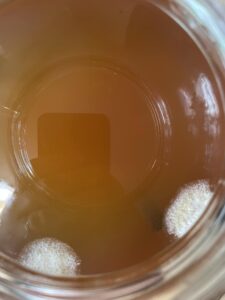
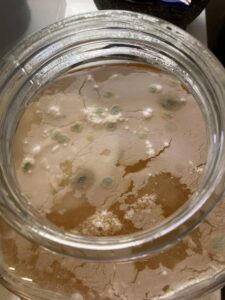
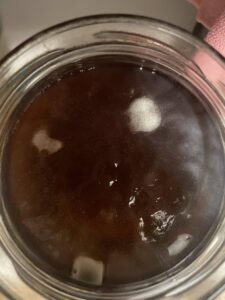
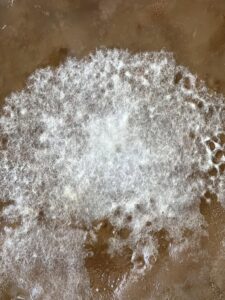
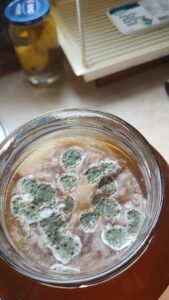
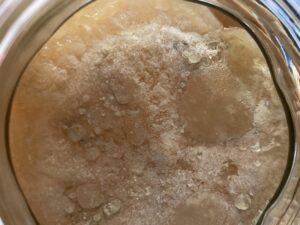
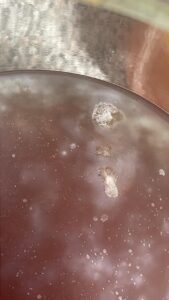
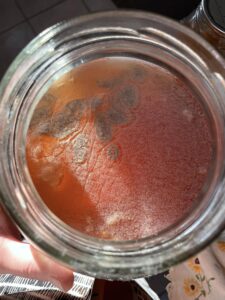
Mould is fuzzy, hairy, or velvety – sometimes dry and powdery instead. It grows upward off the surface rather than lying flat, so it often looks like it’s standing on top of the liquid rather than part of it. It tends to show up as distinct spots or patches with a soft, undefined edge, rather than an even sheet covering everything.
Colour is not a reliable way to rule mould out. It shows up white, black, blue, green, or brown – sometimes pale at first and darkening over the following day or two. If something looks fuzzy, treat it as mould regardless of what colour it is.
Here are some examples:
What does kahm yeast look like?
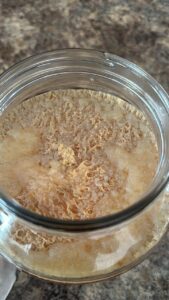
Kahm yeast is flat, not fuzzy – a thin film sitting right on the surface of the liquid, usually white, cream, or slightly tan. It often looks wrinkled or cracked, a bit like a thin skin, and can gather at the edges where the liquid meets the jar. It doesn’t stand up off the surface the way mould does, and it only ever comes in those pale colours – never black, blue, or green.
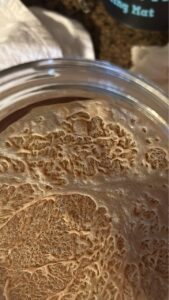
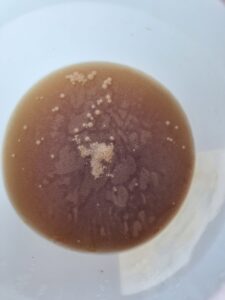
A non-mouldy batch?
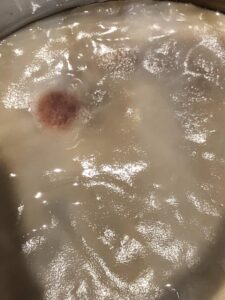
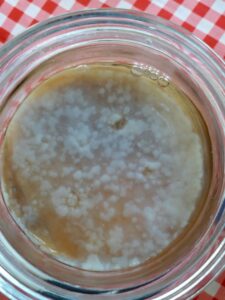
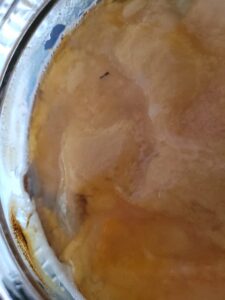
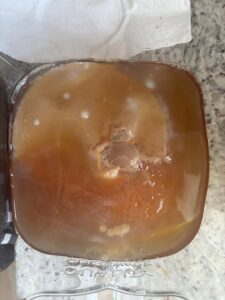
Sometimes you can’t be sure yet. And in these moments, the best thing to do is wait it out. For the ones below, the recommendation would be to wait a few days. If they become furry – its mould, chuck it. But right now, they might just be a funky pellicle or a patch of yeast.
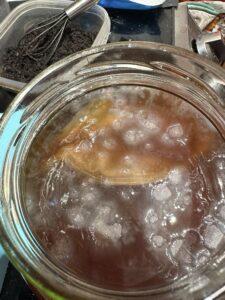
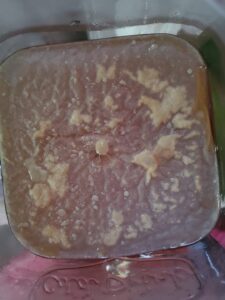
But these ones, I would already expect to be healthy:

Tips & tricks for a healthy brew
The good news? With the Kombooch kit, it’s genuinely hard to go wrong. The starter liquid you received is very…Where to keep your kombucha
Mine lives on a shelf in our stairway. There is no window at all - so it is dark, has…How to bottle
Once your kombucha tastes just right, it’s time to bottle it. Haven't made it yet? Order your kit and then…