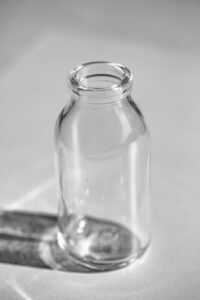
Mine lives on a shelf in our stairway. There is no window at all – so it is dark, has airflow, not bumped, dry, and warm. I believe it lives a very happy life there. As happy as a jar of kombucha can be.
Unsplash - Luisa Brimble
Where to keep your kombucha
Your fermenting jar isn’t fussy about how a spot looks. It does, however, have a short list of actual non-negotiables – get these right and pretty much anywhere in your house will do.
Temperature
This is the one that catches people out most. Too cool and fermentation just stalls – the culture goes sluggish and your batch takes far longer than it should. Too warm, and it’s not just slow, it can actually harm the SCOBY itself. 24–26°C is ideal, but not so realistic in Utrecht. Anywhere from 16–29°C will work, you’ll just need to adjust how long you leave it. Cooler runs slower; warmer speeds things up. In the winter, I place mine on a plant seeding warm mat, and tape the thermometer to the bottom of the jar, so it does not overheat.
Airflow
A cupboard that never gets opened can pick up its own damp, musty smell – and your batch along with it. Cupboards and pantries are fine, as long as they’re roomy and get opened often enough to actually exchange air. Closed-off, stagnant spots are the thing to avoid, more than the cupboard itself.
Out of direct light, but not necessarily total darkness
Ambient light or darkness are both fine, it’s direct sunlight specifically that causes problems. A pantry works. A cloth draped over the jar on a counter works too. Mine happens to live on a windowless stairway shelf, which is dark rather than just shady – but that’s because I have the spot for it, not because shady would have been wrong.
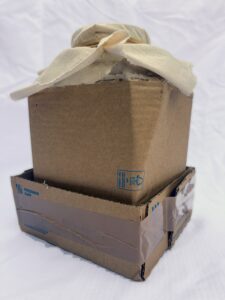
If you have nowhere dark, you can make one. A cut-down cardboard box around the jar, left open at the top so the cloth cover can still breathe, holds warmth and blocks light well enough to turn an ordinary corner into a good one. It doesn’t need to be elegant. It needs to hold some warmth and keep the worst of the light off, and a cardboard box does both.
Not bumped
A spot that’s out of the way of foot traffic, doors, kids, or pets means less risk of it getting knocked, spilled, or having the pellicle disturbed. A stairway shelf, the back of a counter, or a shelf up and out of the way all do the job. The pellicle grows at the top of your ferment to protect your brew from dust. Disturbing it can harm this protective seal.
Dry
Damp spots invite mould, which is the one thing you really don’t want anywhere near your SCOBY. Avoid anywhere with condensation or standing moisture – under the sink, right by a kettle that’s always steaming things up, that sort of thing. A basement is not a good spot for this reason.
Away from other things
- Other active ferments – sourdough, kefir, yogurt, beer. Aim for a minimum of at least 6 feet if they’re sharing a room.
- Harsh chemicals – air fresheners or cleaning sprays near the jar can be absorbed by the SCOBY in small amounts, which can throw it off or kill it outright.
- Garbage, and anything already going mouldy – a bowl of overripe fruit counts.
- Houseplants – damp soil and standing water in planters can harbour the kind of mould and insects you don’t want near your brew.

How to make first batch of Kombucha
Did you get a Kombucha brewing kit? Then you’re ready to start brewing! These are the precise, best-practice instructions for…
Flavour ideas for the second fermentation
One of our jars of Kombucha makes just under 4 litres of plain kombucha. 10% of that you need to…
Tips & tricks for a healthy brew
The good news? With the Kombooch kit, it’s genuinely hard to go wrong. The starter liquid you received is very…